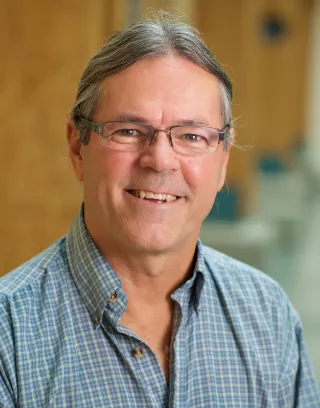
Ross Hoffman completed his Ph.D. in Native Studies at Trent
University. He began his studies in the discipline of Native Studies at Trent
University, completing a B.A. in the mid 1970’s. He earned his M.Ed. in
Curriculum Studies at the University of Victoria. Originally from Ontario, he
has lived for more than two decades in northwestern BC. During that time, he
has worked within Wet’suwet’en, Gitxsan, and Cree
communities on a variety of community-based research projects in the
areas of education, language and culture, and health and wellness. This interdisciplinary research has included extensive work
in the oral tradition with Elders and other knowledge holders. Prior to
coming to UNBC, Ross worked as a sessional instructor with Trent University and
Northwest Community College. His broad research interests include studying the
relationship between cultural renewal, identity, and health and wellness.
Dr. Fyre Jean Graveline is a Metis (Cree)
Traditionalist, scholar, teacher, healer, artist, activist and mother. Employed
in the fields of education and human services for the last 30 years, she has
consistently challenged individuals and organizations to examine and change
their attitudes and practices while working to revitalize Aboriginal
Traditions, to honour the knowledge of community resources, especially Elders.
Recently, she has been the appointed as the Chair of the First Nations Studies
Program (FNST) at University of Northern British Columbia (UNBC).
"I enjoy
environments in which we are working together to contribute in meaningful ways
to cultural renaissance. I remain challenged to create and maintain respectful
learning environments for all students and faculty members, given differences
in race, gender, tribe, and the multiple and contradictory impacts of
acculturation. I feel my life is a creative blend of Tradition and academia,
and see the Chair's position, as well as the teaching I do, as opportunities
both to share the knowledge I have gained, and to achieve greater integration
in my own life. I accept the leadership role in the FNST program as both a
spiritual calling and an academic pursuit," said Dr. Graveline.
In her inspiring book:
Circle Works: Transforming Eurocentric Consciousness (1998, Fernwood Books,
Halifax) she
creatively combines Aboriginal teachings with feminist and
anti-racist theory and practice to document her daily lived experience as a
teacher/activist. Her new book, a manuscript of narratives and art, personal
and political, which reflect her own growth and development, entitled Healing
Wounded Hearts: Stories I tell to Teach, has been recently published by
Fernwood (Fall 2005).
"I believe personal
growth and healing are vitally connected to change in our communities and
revitalizing our relationship to Earth Mother", says Dr. Graveline. As a
researcher, she is interested in healing through traditional methods:
connection to ceremony, land, language, story, art, music and circle. She is
always exploring the multiple ways in which Aboriginal people can be inspired
to achieve greater success within post-secondary contexts.
Tonia
Mills was previously Research Assistant Professor and Lecturer at the
University of
Virginia,
USA.
She earned her BA from Radcliffe/Harvard, and her PhD from Harvard. First
Nations land claims, religion and law, and reincarnation beliefs and cases are
her current research interests. She has conducted field work with the Beaver
Indians since 1964. Tonia co-edited (with Richard Slobodin) Amerindian
Rebirth: Reincarnation Belief Among North American Indians and Inuit
(1994), and is author of Eagle Down is Our Law: Witsuwit'en Feasts, Laws and
Land Claims, published by UBC Press (1994). This latter book is the result
of her spending three years living in Witsu wit'en territory and serving as an
expert witness and writing an expert opinion report for the Delgamuukw
case. Her book, supported by a SSHRC Grant, "Hang On To These
Words: Johnny David's Delgamuukw Testimony" was published by the
University of
Toronto Press (2005). She has been
awarded a Shastri Indo-Canadian Institute Fellowship for "A Longitudian
Study of Young Adults who were said to Remember a Previous Life". She
teaches undergraduate and graduate courses and one on "Indigenous
Perspectives on Reincarnation and Rebirth" (at both levels). Tonia has
also published in a variety of journals such as Culture, B.C. Studies, and the
Journal of Anthropological Research, and chapters in books.
Karyn
Sharp is currently completing her Ph.D. at Simon Fraser University in
archaeology. She earned her B.A. from Radford University and her
M.A. from the University of Utah. Her current research interests
include First Nations resource planning, traditional environmental
knowledge, traditional subsistence in the modern world, and land use
studies. Karyn has worked with the Dene of the Black Lake reserve
in Northern Saskatchewan.
Margo Greenwood is an Indigenous scholar of Cree ancestry
with more than 20 years experience in the field of early childhood education.
Professionally and personally, children have been the focus of her life. She has
worked as a front line caregiver of early childhood services, designed early
childhood curriculum, programs, and evaluations, and taught early childhood
education courses at both the college and university levels. As a mother of
three, she is personally
committed to the continued well-being of children and youth in
Canada.
While Margo’s focus has been on all children, she is
recognized provincially, nationally and internationally for her work on
Aboriginal children. She has served with over 20 national and provincial
federations, committees and assemblies, and has undertaken work with UNICEF,
the United Nations, and the Canadian
Reference Group to the World Health Organization Commission on Health
Determinants. In recognition of her years of work in early childhood, Margo
Greenwood was the recipient of the Queen’s Jubilee medal in 2002.
Currently,
Margo is an Associate Professor in both the First Nations Studies and Education
and programs at the University of Northern British Columbia (UNBC). Her current
research interests include the structural impetus for the development and
subsequent implementation of early childhood development programs and services
in
Canada and with the
Kohanga reo in
New Zealand;
and cross-cultural communication and children’s transition from preschool to
the formal education system. In addition to her teaching and service
commitments, Margo also directs a number of research institutes including the
National Collaborating Centre for Aboriginal Health; the Centre of Excellence
for Children and Adolescents with Special Needs, UNBC Task Force on Substance
Abuse; and BC Initiatives, a Ministry of Health activity that is comprised of
Aboriginal ACTNOW BC and Preschool Visual Screening.
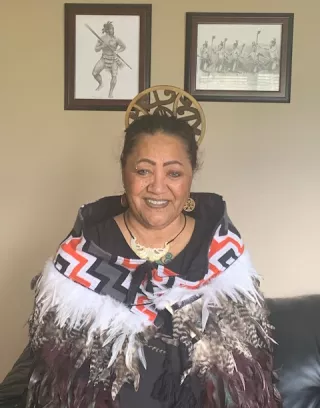
Maori
born and raised Tina is doing her PhD at UBC while teaching many
courses for FNST at UNBC on Aboriginal Women, Oral Tradition, Humour,
Foundations of First Nations and many other subjects.
Leona Neilson
Instructor
First Nations Studies Program
Leona
is a Culture teacher for the Headstart program at the Native Friendship
Centre. She has been in this position for the last four
years. Leona has been teaching Cree Language at UNBC since
1996. She also teaches Cree Language to Elders and to children in
the community. As well, she teaches Cree culture and language to
elementary and high schools within the community. She also
teaches about traditional plants and the ways in which they can
utilized for medicinal purposes.
Leona has a diverse and versatile knowledge
of making traditional crafts such as moccasins, dream catchers, drum
making, rattles, and ribbon shirts.
Leona is from the Cree Nation and a mother of two daughters and also a proud grandmother of three grandchildren.
Adjunct Faculty
Jo-Anne Fiske
Adjunct Professor
Jo-Anne Fiske is Professor and Coordinator
of Women's Studies at the University of Lethbridge and Adjunct
Professor with First Nations Studies at the University of Northern
British Columbia. She received her PhD in Anthropology from
UBC. She has worked with First Nations of Central British
Columbia for more than 20 years. Her work focuses on nation/state
relations and in particular on implications of state policies for First
Nations women. Her areas of expertise include legal anthropology,
feminist anthropology, gender, and health.
Deanna
Nyce has a Bachelor's Degree in Education as well as a Master's Degree in
Educational Administration. Her research and publications have
provided a template for Aboriginal curriculum development. Deanna
has advocated for Aboriginal education with the BC Ministry of
Education and has been a guest lecturer/instructor at many BC
educational institutions. Deanna, like the elders, felt that
their people's future success depended on the education of their
youth. Deanna was one of the key figures in the creation of the
Wilp Wilxoskwhl Nisga'a (Nisga'a university-college) and its
affiliation agreement with UNBC. As CEO of Nisga'a university
-college, she oversees the operation of the institution, is responsible
for educational planning and programming, and fostering affiliations with
other post secondary institutes for program delivery in the Nass Valley.
In
September 2004, Deanna was the recipient of the Aboriginal Woman of
Distinction Award and the Forging of our Future with Education
Award.
Wendy
Aasen is an applied anthropologist who has worked with First Nations
communities in northern BC, Alberta, and the NWT since 1988. She
has used an interdisciplinary approach on a range of community-based
research projects including place name studies, land use studies,
research on traditional and contemporary First Nations leadership, and
education and training needs assessments. As an expert witness
specializing in the cultures of Aboriginal Peoples of the Western
Subarctic, Wendy introduced a practical methodology for analzying oral
history at the Treaty 8 (Benoit) taxation case.
Wendy
taught a wide range of courses for the First Nations Studies Program at
UNBC from 2000 to 2004, previously held a one year term position at the
University of Alberta's School of Native Studies, and taught
sessionally for the Department of Anthropology at the University of
Alberta. While at the School of Native Studies, Wendy organized
the Canadian Indigenous/Native Studies Association (CINSA) Conference
and has sat on the CINSA executive as Member at Large. Currently,
as an Adjunct Professor at UNBC, Wendy co-supervises/is a Commitee
Member for graduate students working on diverse topics such as
education , traditional and contemporary leadership, land use (TUS, TEK
SIA), and economic development.
Paul Michel
Adjunct Professor
Paul
F. Michel, a Secwepmc (Shuswap First Nations) educator, is currently
the First Nations Director at the University of Northern British
Columbia. He is also an adjunct Professor for the First
Nations Studies Program. Paul F. Michel has his Bachelor of Arts
Degree in Sociology and his Master's Degree in Education both from Simon
Fraser University.
He has a diverse
background in First Nations education. He has been a principal of
a First Nations Elementary School in Fort St. James; he has taught for
the Prince George Native Friendship Centre; he has instructed for the
College of New Caledonia; and he has taught for the University of
Northern British Columbia.
In the Prince
George Nechako area, Paul Michel shares his Secwepmc traditions in many
ways; he tells oral history stories; he drums and sings traditional
songs; and he instructs and plays Lahal (First Nations game). His
message to educators is that First Nations traditional wisdoms can
merge with contemporary educational curricula in unique dynamic and
powerful ways.
Earl Henderson was born in Manitoba of Sioux, Cree and
Métis Heritage. Earl has lived and worked in the BC Interior for approximately 30 years and he currently resides
in
Prince George.
He has an Interdisciplinary Masters in First
Nations,
Anthropology, and Education, a double Major in First
Nations and
Anthropology, along with a Pre-BSW
Diploma and a Métis Studies
Certificate. He has traditional teachings and combines this traditional knowledge and western academic background
to pursue a more holistic approach to health, healing, and education. Earl currently teaches Métis/First Nations
studies at UNBC.