Think Copenhagen, Act Locally
December 15, 2009

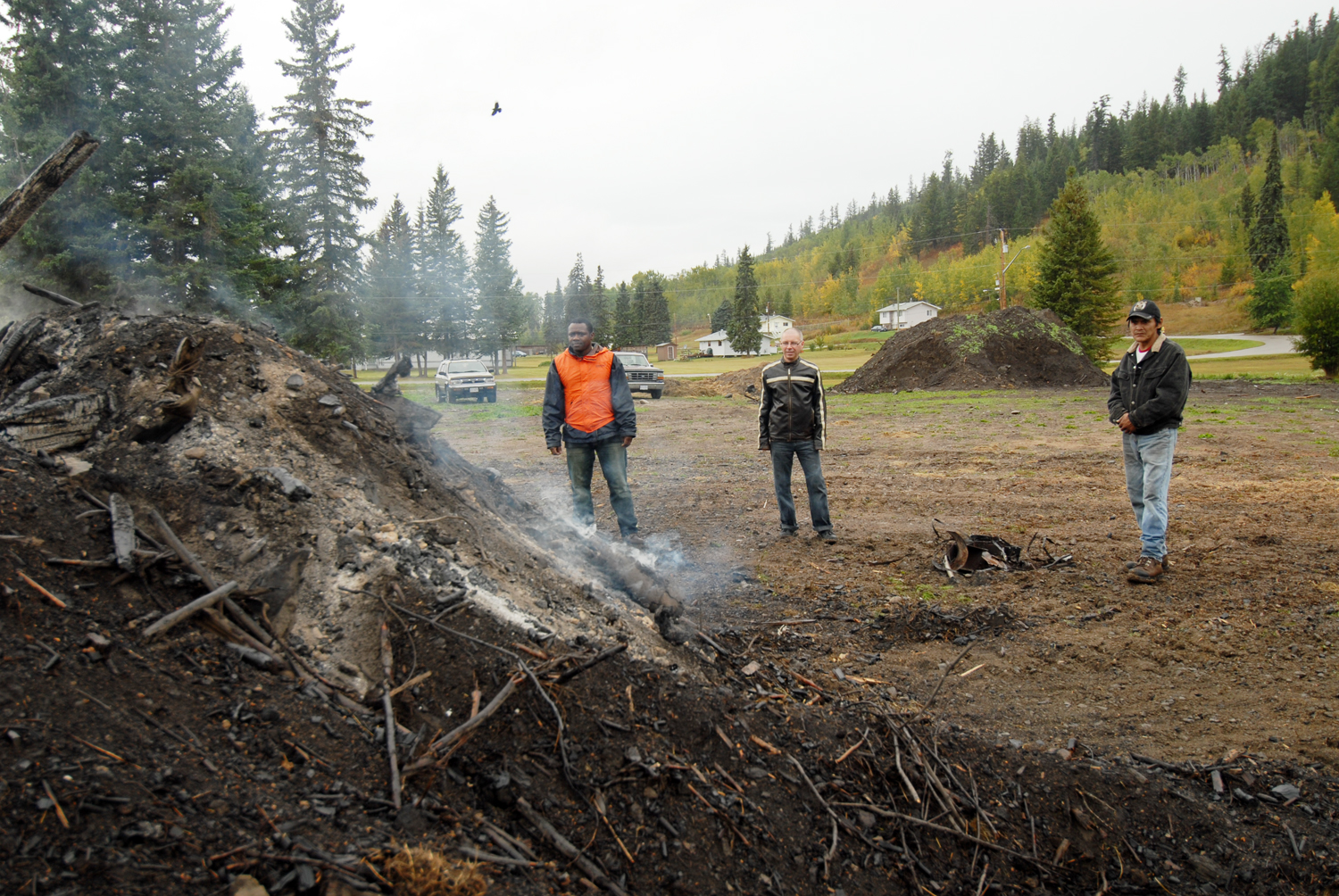
(From L to R) Eddison Lee Johnson, Dr. Stephen Déry, and Stellat'en Forestry Coordinator Stacey Naziel by a smoldering pile of wood waste near the community of Stellaquo. Download the high-resolution image.
As the UN Climate Change Conference unfolds in Copenhagen, much is being made of global ideas related to “carbon offsets,” and “cap and trade.” But what can a small, rural community do to become greener? The Stellat’en First Nation recently recruited environmental scientist Stephen Déry from the University of Northern British Columbia to help find answers for their community of Stellaquo, located west of Fraser Lake.
“It has been the young people of the community who have really forced the issue,” says the Band’s Natural Resource Director Eddison Lee-Johnson. “Most have seen Al Gore’s movie An Inconvenient Truth, and are concerned about the future of their community - and the world - unless bold steps are taken.”
Dr. Déry, who lives near Fraser Lake, and is a Canada Research Chair in Northern Hydrometeorology, and an expert in how global warming affects the environment, says he was approached by Stellat’en band representatives late last year and told they wanted to reduce the pollution in their community, and also lessen its carbon footprint.

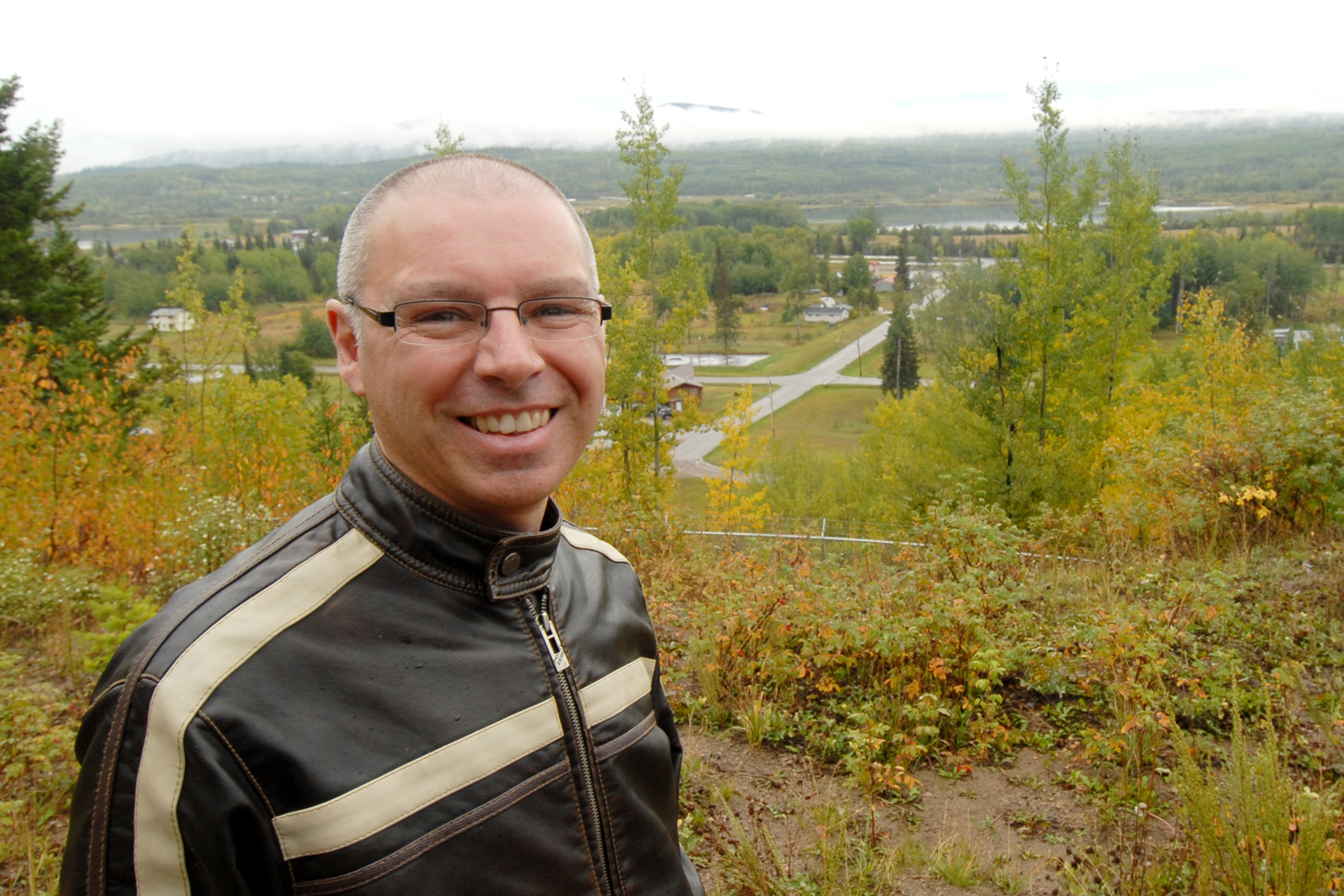
Dr. Stephen Déry in Stellaquo. Download the high-resolution image.

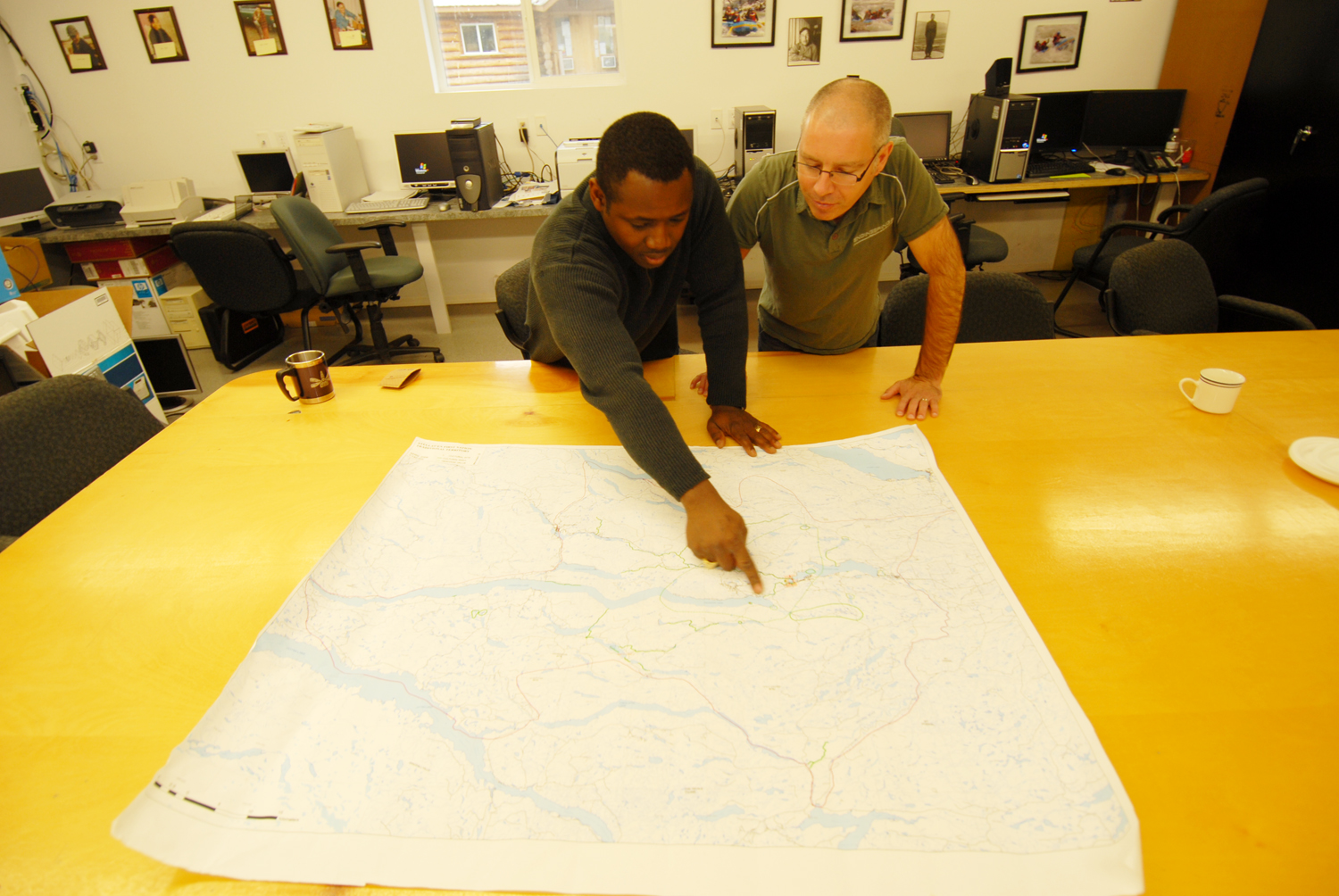
Natural Resource Director Eddison Lee-Johnson and Dr. Déry. Download the high-resolution image.
“There are a number of impediments to carbon emissions and air pollution reduction experienced in rural First Nations communities that are not challenges faced in larger cities,” says Dr. Déry. “These include: the remoteness of the region and lack of public transportation, which forces many to drive long distances; the harsh climate, leading to high energy use for heating; and a lack of resources faced by small, rural communities.”
In an attempt to overcome these obstacles, Dr. Déry has borrowed a concept from the popular television series “The Biggest Loser,” but is challenging the approximately 500 Stellat’en from the area to shed emissions and particulate, rather than excess weight.
The Stellat’en First Nation Carbon Footprint Project will include:
- An education campaign including an information workshop to explain the contribution of greenhouse gases to climate change and its implications
- A greenhouse gas and particulate emissions inventory of the community
- A ride-sharing program, consisting of a telephone "hotline" that band members can contact to seek rides for their daily commutes or for longer trips in the region
- An advocacy campaign of alternative modes of transportation including bicycles
- Advice on how to improve housing insulation to increase energy efficiency
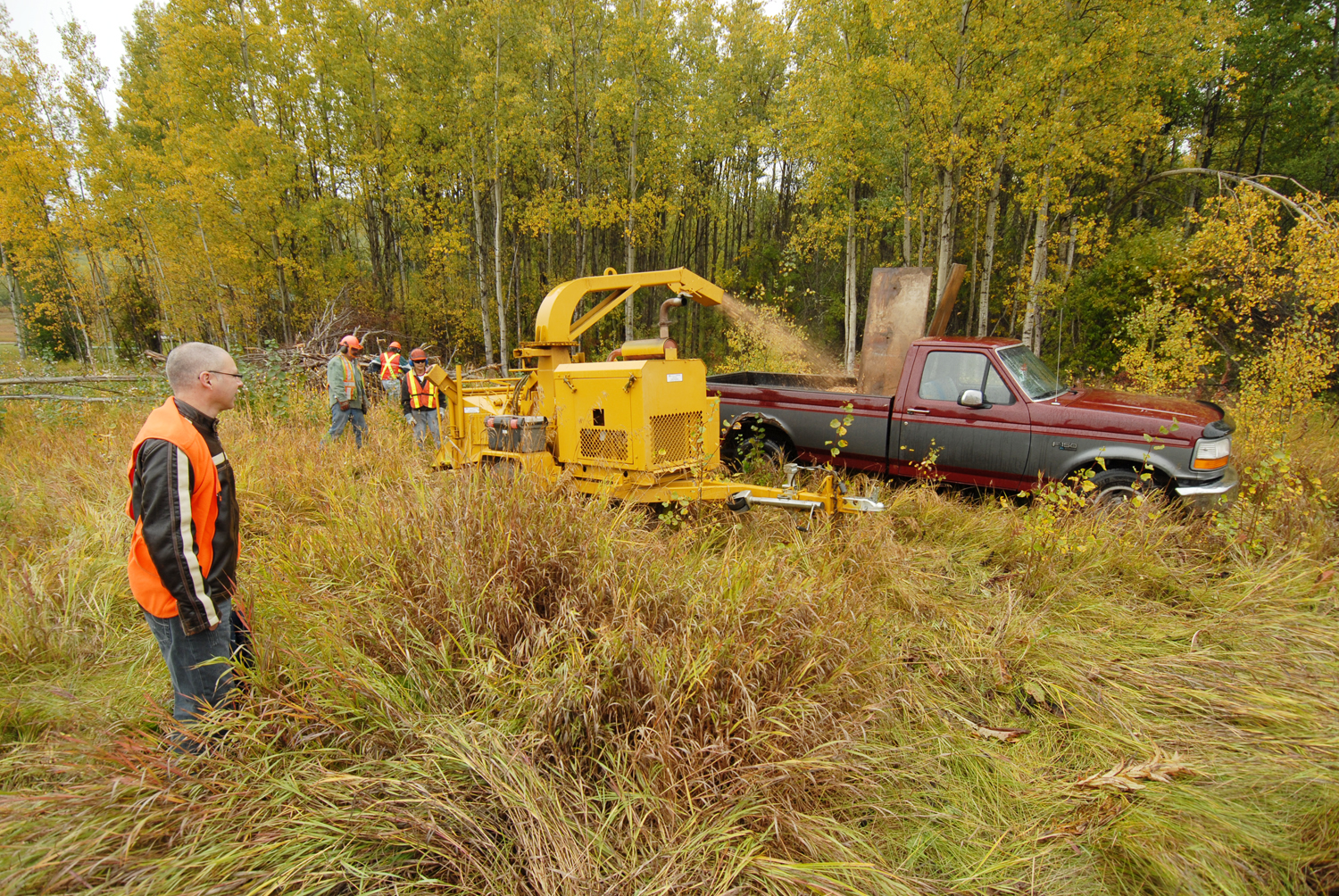
- Recommendations on how to reduce slash-burning in the community. This includes the purchase of a wood chipper to yield mulch that would be beneficial for a community garden or other applications such as bioenergy
"A key component of this project is the recognition of the importance of traditional knowledge in addressing climate change,” says project team member, and Post-Doctoral Fellow Darlene Sanderson. “Ten thousand years of experience has provided aboriginal peoples with a wealth of expertise of the natural world.”


A wood chipper turns wood waste into chips for mulch. Download the high-resolution image.
Dr. Déry and his team, consisting of Post-Doctoral Fellow Darlene Sanderson, Kyle Aben of the Pacific Institute for Climate Solutions, and UNBC Research Assistant Theo Mlynowski, launched the project with a workshop at the New Stellat’en Hall on Friday, December 11.
This spring, a final workshop will be held to review the participants' progress in reducing their carbon footprint. A second survey will be completed to assess behavioural changes that have led to reduced greenhouse gas emissions and pollution, and the data will be analyzed and compiled in a report by summer 2010.

Location of Stellat'en 1st Nation. Download the high-resolution image.
Research Team