Forest Ecology and Management


This degree is administered by the Ecosystem Science and Management Program


Transition Laddering Agreements
Diploma Transfers by Institution

Information for transfer students


SUCCESS STORIES

Professional Forester of the Year – Shannon Janzen, RP, Black Creek, BC  Shannon Janzen harvesting salmon roe; photo courtesy Dr. Mark Shrimpton

Shannon Janzen is a registered professional forester with a BSc in Natural Resources Management from the University of Northern British Columbia (1998). Shannon works for the Coast Forest Conservation Initiative (CFCI) which is a collaborative effort of five forest companies committed to new approaches of forest conservation and management in the Central and North Coast of British Columbia. Her role is to lead the continued development and implementation of Ecosystem-Based Management (EBM) policies and practices on behalf of CFCI companies and affiliated partners.
Shannon was presented with this award based on the work she has done on EBM  implementation in the north and central coast over the past several years. EBM is a complicated forest management technique that brings together communities, government, forestry companies, First Nations and environmental groups. Working on EBM was no easy task, but Shannon embraced the chance to make EBM work for the benefit of everyone involved.  Prior to this position, Shannon was employed by Western Forest Products Limited on North Vancouver Island.
Job well done, Shannon!


ForesTrust is the registered charity of the Association of Forest Professionals (ABCFP). Through it ABCFP creates endowments at post-secondary institutions across British Columbia.  Forestry students are granted scholarships and bursaries from the income these endowments earn.  Last year, 12 students won 13 awards. Three UNBC Forestry students were among the winners.  Here are their stories, quoted from the journal “BC Forest Professional”, July – August 2009 edition.  


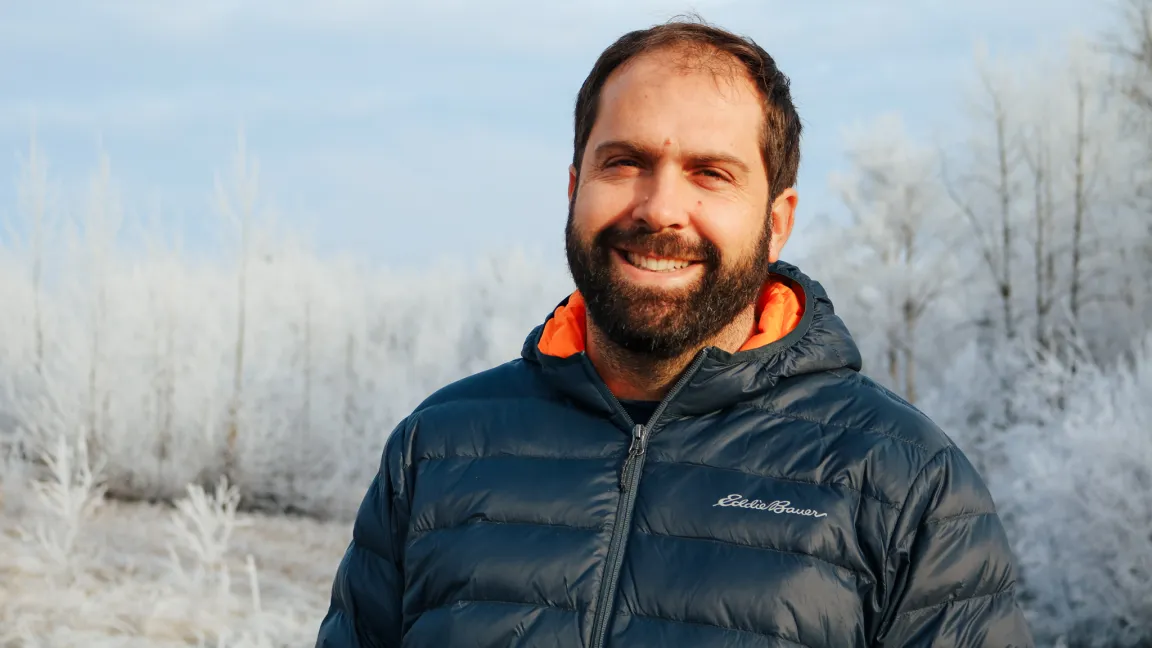
Rob WillowsRob Williams, photo courtesy of ABCFP
ABCFP Award for Excellence ($2,000)
ABCFP Bursaries ($1,000)
Hometown:  Calgary, AB

"My wife is the biggest reason I got into forestry," said Rob.
She thought that, quite correctly, I should get into a line of work that allowed me to enjoy my leisure activities with my work activities. Forestry as it turns out was just the career to do this."

One of Rob's favourite classes at university was plant systems.  It exposed him to over 180 different plants found in British Columbia. Most were indicator plants, and students had to be able to identify and describe each one. Rob was awarded the highest mark in UNBC history in this class!
Where does Rob see forestry going in the next 15 years? "I see forestry taking on a new and different look. I think that intensive forestry practices will become more common, especially as competing interests put further constraints on the timber harvesting land base. I also see large potential in the bio-energy sector. I would tell anyone getting into forestry that it is an excellent choice as well as a very challenging and rewarding career," said Rob. "Now is the best time to get in as the enrollments are low and the retirements are high. Economic conditions have slowed some of the openings lately, but when the industry turns the corner and begins to recover the opportunities will be plentiful."

Jason Smith, photo courtesy of ABCFP

Jason Smith
ABCFP Award UBC Okanagan ($2,300)
Hometown: Salmon Arm, BC

Jason got into forestry to help to keep our province's forests sustainably managed. His favorite aspect of forestry is consulting for private lands and forest fire. He was also a forest fire fighter in 2005 in Salmon Arm as a Junior Initial Attack out of the RapAttack Base. This summer he's working for West Fraser Mills in silviculture. After he finishes his education he plans to gain experience under a Registered Professional Forester (RPF) as a Forester in Training (FIT) and eventually become an RPF himself. When he's not working or going to school, Jason camps, plays guitar, spends time with his wife, attends church events and snowboards.
Where does Jason see forestry going in the next 15 years? "I think there will be more value-added products created by having a smaller land base that is intensively managed." 
As for people getting into forestry, this is Jason's advice: "Find summer employment sooner rather than later and get as much experience as possible. Also, don't let the doom and gloom media attention stop you from working in one of the most interesting fields out there."

Rory Plunkett

Rory Plunkett
ABCFP Bursaries ($1,000)
Hometown: Taylor, BC

Rory's absolute favorite course is introductory soils.
"The course itself is well designed, and you get a lot back out of it," said Rory. "There is also something appealing about digging holes and getting dirty."
This summer, Rory hopes to be working for the Dawson Creek branch of Industrial Forestry Service again. "I usually work as compassman or site plan field assistant. The techs take you under their wings and really go about being mentors."
Where does Rory see forestry going in the next 15 years? "I'm a bit of a pessimist, so I'll answer with where I hope forestry will go. I hope forest professionals will have reached out to British Columbians more, and our reputation will be more highly regarded," said Rory. "Hopefully, in this new era of professional reliance, we will have the discretion to use our academic background in conservation and ecology to influence our daily decisions to a greater extent."
Rory believes this new generation of foresters, who grew up post-Clayoquot, will be the vanguard of a new era. "I would tell people considering forestry that this an interesting time to get involved. There are just so many ideas and solutions floating around out there, and we need some really good people to implement them."


NEWS 

TRANSFER AGREEMENT
between the
University of Northern British Columbia
and
School District 73 (Kamloops/Thompson)
Visit www.unbc.ca/esm to view details.

NEW FORESTRY PROGRAM
        Curriculum changes will make UNBC students leaders in adaptingto
environmental change. 
To view the Degree Requirements
for the
NewForest Ecology and Management Program

POST DIPLOMA PROGRAMS FOR RESOURCE MANAGEMENT TECHNICIANS
To view details of the current post-diploma transfer agreements
  • Continue your education at UNBC by completing a degree in NRM (Forest Ecology and Management)
  • Honours Degree option is available
  • Accredited by the Canadian Forestry Accreditation Board                                                             Currently Revised to Meet the New Degree Requirements
 Photo courtesy Dr. Chris Johnson
The Forest Ecology and Management Program at UNBC is an integral part of the Faculty of Natural Resources & Environmental Studies. The Faculty's innovative approach to natural resources education features an interdisciplinary 'department-free' structure, teaching across disciplines, and learning experiences that reflect complex, real-world problems.
The undergraduate forestry program develops the knowledge, skills, and competencies required for professional forestry practice. The program exists as a Major in Forestry within the BSc in Natural Resource Management and is one of the most popular programs at UNBC. The Forestry Major is accredited by the Canadian Forestry Accreditation Board. A Cooperative Education option enhances the experience and professional development of many students in the program.
The BSc in Natural Resource Management also includes majors in Wildlife and Fisheries, and Resource Recreation. Graduate programs in Natural Resources and Environmental Studies include the MA, MSc, and interdisciplinary programs at the masters and doctoral levels.

Photo courtesy Dr. Chris JohnsonUNBC's location in northern British Columbia provides strong linkages with natural resources, industry, and resource-dependent communities. Opportunities for outdoor recreation and field research abound in this region.  The main campus, situated in the forest above Prince George, is an ideal location for conduct of outdoor labs.  Forestry education and research are also facilitated by the 13,000 ha John Prince Research Forest, located near Fort St. James, and the 10,000 ha Aleza Lake Research Forest located near Prince George.  Thanks to awards from industry and government, the Enhanced Forest Laboratory provides greenhouse and other research facilities.