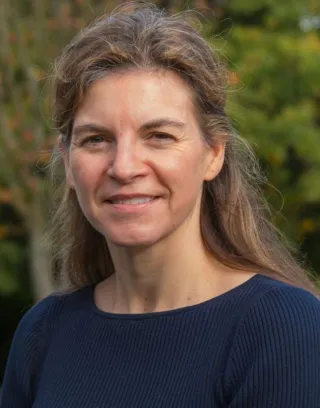
I hold anthropology degrees from the University of Alberta (PhD), University of Toronto (BA) and Laval University (MA). My main areas of expertise include the Russian-speaking Diaspora, the Russian Federation and its constituent populations, nationalism and ethnicity, identy and belonging and French North America. For the past four years, I ahve been conducting research and fieldwork in the Komi Republic in the Russian Federation and I was recently awarded a SSHRC grant to study the French-speaking populations of Prince George and the Peace River Region, Alberta.
Given this range of interests, I would entertain proposals from students interested in conducting various research topics around the world and in Canada. This would include: an examination of Canada's Russian-speaking populations (Old Believers, Dukhobors, recent immigrants); a study of the Russian-speaking population in Israel; research anywhere in Eastern Europe (the Baltic States, Ukraine, Romania, etc.) or any research proposal examining one of North America's French-speaking populations either in B.C., elsewhere in Canada or anywhere in the world.
At the outset, the research I conducted took for granted the recent invention of nations. However, as new lines of inquiry emerge, I ahve developed a new theoretical framework for understanding nationhood and other forms of community. Rather than accepting the easy premise that states create nations, I am proposing that other institutions are equally (if not more) important than states in the emergence of national communities. At the moment, I am examining the role of the Orthodox Church in the rise of the concept of 'narod' or 'people' in Russian. lOther highlights of my research include an examination of graves and the ways in which they are a focus for community among Russians, the concept of the Russian soul and the ways in which this metaphor defines not only Russian nationhood but many others and finally the significance of memorials and museums in defining identity.
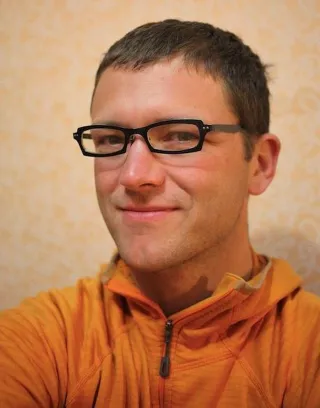
Prior to joining UNBC in 1994, Richard Lazenby was an NSERC post-docoral fellow at the University of Guelph, School of Human Biology. He holds BA and MA degrees from Simon Fraser University, and a PhD in Biological Anthropology from McMaster University.
His NSERC-funded research areas include primate functional skeletal biology, forensic anthropology, and human ecology and adaptability.
He has authored a number of articles in journals, including the American Journal of Physical Anthropology, the American Journal of Human Biology, the Journal of Theoretical Biology, The Anatomical Record, the International Journal of Osteoarchaeology, Current Anthropology, Investigative Radiology and the Journal of Forensic Sciences. Dr. Lazenby's current research program addresses the origins of human handedness through a comparative study of geometric morphometric variation in the hand skeleton of human and non-human primates.
He is past-President of the Canadian Association for Physical Anthropology, and is a consulting forensic anthropologist for the Office of the Regional Coroner for northern British Columbia, and with the RCMP 'E' Division, attached to the Missing Women's Task Force in Vancouver.
|
James Andrew McDonald
Associate Professor
Office: ADM 3018
Tel: (250) 960-6688
E-mail: mcdonald@unbc.ca |
|
Dr. James McDonald received his PhD in Anthropology and Sociology at UBC. His field work experience includes the Arctic, several provincial norths, northern Russia and Siberia, Scotland and the South Pacific; however, his main research area is northwest BC. More specifically, he has worked in the Terrace area since the 1970's when he began a series of studies that became the Kitsumkalum Social History Research Projects.
Jim has published scholarly books and articles in English and in Russian translation, a series of children's cultural books, as well as numerous reports for First Nations, Museums, and governments. His scholarly work covers such topics as globalization, colonization and decolonization, community-centred methodologies, research ethics, curriculum development, ethnography, ethnohistory, northern studies, archaeology, and biological anthropology.
After ten years in Toronto as a curator of Ethnology at the Royal Ontario Museum, Jim returned to BC in 1994 to chair UNBC's First Nations Studies Program and the Anthropology Program. He was also the Director of the UNBC First Nations Centre. In these capacities, Jim initiated several curriculum projects that resulted in the creation of First Nations cultural and language courses, certificates in the specific topic areas of Traditional Knowledge, Nisga'a Studies, Métis studies, General First Nations Studies, and field schools in archaeology and ethnography. Currently, he is the Chair of the Council of the University of the Arctic and past President of the Association of Canadian Universities for Northern Studies (ACUNS).
Jim has returned to UNBC after a three year leave at Northwest Community College in Terrace where he established a House of Learning and Applied Research (HLAR). The purpose of HLAR is to act as a catalyst for indigenizing the College environment and curricula, supporting applied and experiential research, and the development of teaching skills.
|
Farid Rahemtulla
Assistant Professor
Office: ADM 3008
Tel: (250) 960-6691
E-mail: farid@unbc.ca |
|
Farid is an archaeologist with a wide range of research interests. He has been involved in several archaeological projects throughout the coast and interior of British Columbia, and in Eastern Africa. His current geographic foci are the North Pacific Rim, specifically, British Columbia and Siberia. Topical interests include: archaeological theory; lithic and bone technology; zooarchaeology; complex societies; household archaeology; archaeology of human origins; archaeological resource management; Indigenous Peoples and archaeology; and public archaeology. Farid received a B.A. from the University of Alberta, an M.A. from the University of Toronto, and an MA and PhD from Simon Fraser University.
Current projects:
- Ancestral First Nations land-use and settlement patterns between 11,000-5,000 years ago on the central coast of British Columbia. Using newly developed techniaques and theoretical frameworks, Farid is examining the stone tool technology at the site of Namu, which is located in Heiltsuk Traditional Territory.
- Use of terrestrial mammal bone in coastal archaeological communities. An examination of the way in which land mammal remains in coastal sites are conceptualised by archaeologists.
- Pebble tools and fish processing. Experimental projects to assess the potential of using pebble tool technology to process salmon.
- The development of early hominid cognition during the Lower Palaeolithic, based on palaeoenvironmental and archaeolical evidence from Eastern Africa.
|
|
Angèle Smith
Associate Professor
UNBC Excellence in Teaching Award
|
My research focuses on landscapes, place and space, the construction and negotiation of cultural identities, and the politics of representation. I explore these concepts primarily in Ireland, in both historic and contemporary time periods. Spatial relations and material culture are central to my research, thus my work bridges many sub-disciplines: cultural anthropology, ethnohistory, and historical archaeology and reaches out to a broader audience that includes geographers and historians.
I earned my Honours BA at
the
University of
Toronto and MA at
McMaster
University.
My PhD dissertation (
University of
Massachusetts,
Amherst)
entitled "Mapping Meanings: Representing Landscapes and Pasts in 19th
Century Ireland", focused on the representation of social landscapes and
the construction of competing identities on the colonial maps. My research
explores how the landscape and the past have been shaped by and help to shape
the social meanings and social relations of power at the local level.
In keeping with these issues
of place and identity, my current research project, funded by the Social Sciences Research Council of Canada (SSHRD), deals with
contemporary concerns of changing identity in
Ireland
within the European Union, and the results of the new urbanization process in
Dublin,
Ireland.
My interest is in the spatial marginalization of the new influx of refugees and
asylum seekers and their experience with racism in
Ireland. Specifically, I focus on how the Irish State spatially engineers the social experiences of asylum seekers in Direct Provision Accommodation Centres, where they are housed for as long as 3-5 years as they await a decision on their refugee status.
My
teaching, like my research, crosses sub-disciplinary boundaries. I have taught
widely across all fields of Anthropology: Introductory courses, theory courses
and upper level thematic courses, including "Social Inequality",
"Feminist Anthropology" and "Landscape, Place and Culture".
In all of these I have emphasized the integrated and holistic nature of
anthropological material. I am committed to teaching and mentoring both at the
undergraduate and graduate levels.
ADJUNCT FACULTY
Fredy Peccerelli is a founding member and the current director of the
Fundación de Antropología Forense de Guatemala (FAFG). Under his leadership the FAFG has grown to over 100 local and international anthropologist, archaeologists, ethnologists and most recently DNA specialists. He has undertaken forensic investigations of war crimes throughout Guatemala, as well as in Boxnia and Herzegovina for the International Criminal Tribunal for the Former Yugoslavia. In 1999, he was honoured as one of the 50 "Latin American Leaders for the New Millennium" by Time Magazine and CNN. Fredy has visited UNBC on three occasions in recent years, giving presentations on the important work of the Foundation, and has worked with Anthropology and Geography to develop an exchange program between UNBC and the FAFG.
Dr. Erin Gibson
Adjunct Professor
SSHRC (Social Sciences and
Humanities Research Council) Postdoctoral Research Fellow
|
|
I am an anthropological archaeologist who studies the archaeology of movement. I obtained my Bachelor of Arts in anthropology at Simon Fraser University, and my MPhil (Mediterranean Archaeology) and PhD "Negotiating Space: Routes of Communication in Roman to British Colonial Cyprus" in the Department of Archaeology, University of Glasgow, Scotland. I am an honorary research associate within this department. My research combines the study of ancient routes of communication with the study of how contemporay humans interact and thus brings together ideas from landscape archaeology, historical archaeology, ethnography and heritage tourism. The underlying premise of this work is that no landscape is a passive canvas that receives our actions without also making its mark on us. How we move, what routes we take and make, say a lot about who we are, our motivations and social relationships.
I have undertaken research in the varied landscapes of the Eastern Mediterranean, the Levant, and now, the interior of British Columbia. As a SSHRC Postdoctoral Research Fellow, my research "The Archaeology of Movement: Reinterpreting Interaction in a Historic Social Landscape" takes an interdisciplinary approach to understand the life cycle of a communication route that is best known for its colonial past. The Harrison-Lillooet Gold rush trail was used by prospectors from 1858 to 1867 to travel to the Fraser and Caribou gold fields. Thsi research reassesses the multiple functions, users, builders and relationships embodied in, and played out, along this route.
Like many in the anthropology department, I believe in the importance of public outreach. I am heavily involved in organizing the Anthropology in Our Backyards lecture series and when possible offer courses within the Continuing Studies program at UNBC that appeal to the general public. For the past six years I have worked with colleagues from Australia leading and guest lecturing cultural tours to the Eastern Mediterranean and currently participate in the Australians Studying Abroad International Scholar Lecture Series.
Research Projects:
The Archaeology of Movement: Reinterpreting Interaction in a Historic Social Landscape (ongoing)
Social Sciences and Humanities Research Council Postdoctoral Fellowship
University of Northern British Columbia (UNBC), Department of Anthropology 2011-2013
Communicating Power: Social Interaction in the Southern Levant
Senior Visiting Research Fellow (2007), Council for British Research in the Levant
This project formed part of my ongoing research on past human interaction within Mediterranean landscapes. This research project focused on how power was manifested within, and expressed through, the physical form and location of communication routes. I used experimental techniques to investigate how the experience of building, using and maintaining roads, as routes of communication, may reinforce or undermine relationships of power.
Negotiating Space: Routes of Communication in Roman to British Colonial Cyprus
University of Glasgow 2000-2005, PhD Thesis
Intensive survey techniques were applied to the material culture of roads and paths to investigate the role that communication routes play in reaffirming, redefining and reproducing social and cultural relationships in Roman to British Colonial period Cyprus.
Troodos Archaeological and Environmental Survey Project, Cyprus
University of Glasgow 2000-2004
Team Leader: Adelphi Forest
Specialist: Communication Routes
This interdisciplinary survey which took place in the northern Troodos Mountains of Cyprus investigated the relationship between people and their environment from the Neolithic to the present day. Results, including links to online GIS, searchable database are available via the above link.
|
|
Dr. Mike Evans
Adjunct Professor
|
Mike Evans (PhD McMaster 1996) taught at the University of Northern BC, the University of Alberta, and then joined Okanagan University College, later UBC Okanagan (2005). His primary research relationships are with people in the Métis community in Northern BC, the Métis Nation of BC, the Urban Aboriginal Community of the Okanagan Valley, and the Kingdom of Tonga (in the South Pacific). Dr. Evans has been involved in several community based research initiatives, and in particular has a long-term relationship with the Prince George Métis Elders Society. Together with Elders and community leaders in Prince George he put together a Métis Studies curriculum for UNBC and a number of publications including
What it is to be a Métis (Evans et al 1999)
, A Brief History, of the Short Life, of the Island Cache (Evans et al 2004).
He is currently working with the Elders Society and Stephen Foster and Colleagues from UBC Okanagan, UNBC and the University of Alberta on a participatory video project. As Research Director for the Métis Nation of BC, he serves on the Métis National Council National Research Initiative, helped form the Research agenda for the Métis Nation of BC, and has worked extensively with colleagues at the MNBC on a number of research projects over the last few years. He has supervised graduate students working on urban aboriginal issues and topics related to community based Métis history and geography across Western Canada. He is currently Associate Professor and Head in Community, Culture, and Global Studies at UBC Okanagan.
I am an environmental anthropologist with an interest in the politics of resource use and resource management. My research on commercial fisheries in British Columbia and New England explores the impacts of privatization on fishing families and communities. I also do collaborative research with the Gitxaala nation focused on Gitxaala ecological knowledge and resource management. Other projects include ethnographic and educational film making, and research on the development of marine protected areas and coastal tourism.
|
| Dr. Louis-Jacques Dorais
Adjunct Professor
|
My research interests and my teaching are tied to my academic training in both Anthropology (M.A. from the Université de Montréal) and in linguistics (Ph.D. from Université de Paris-III). Since 1965, I have been studying the relationship between language, culture and society among the Inuit of Nunavik (Québec's Arctic), Nunavut and Greenland with a focus on community organizing, semantics, dialectology and the sociolinguists of the Arctic. These interests were then applied to the study of the French-speakers of Louisiana and the Vietnamese Diaspora of Québec, Canada and Europe.
At the present time, I am working on elaborating a descriptive model of the construction and interrelationship of identities both cultural and ethnic that includes the North American French-speakers, the English-speakers of Québec and Canada and the indigenous populations (notably Inuit) and the cultural communities of Vietnamese origin.