
Mapping the Impact of Kidney Disease on Hand Function
Dr. Pedro Almeida, an assistant professor with the UBC Master of Occupational Therapy – North program at UNBC, is examining how chronic kidney disease affects hand and upper-limb function. The project was funded by a Division of Medical Sciences Catalyst Grant.
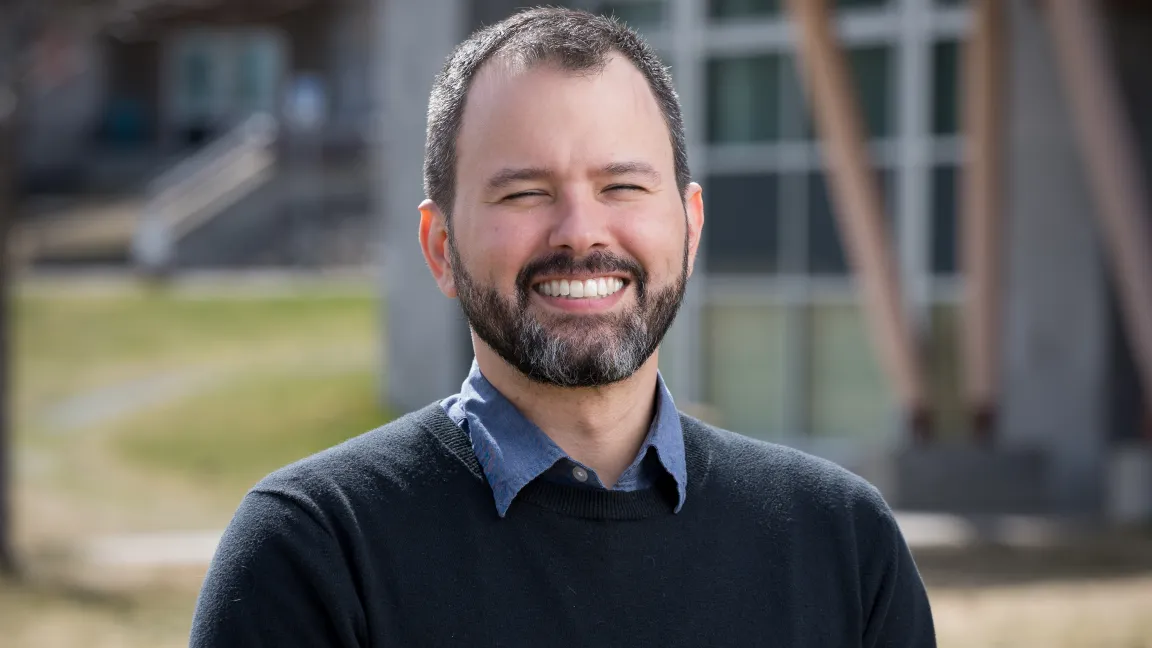
For many people, chronic kidney disease is understood mainly as a condition that affects how well the kidneys filter the blood. But for those living with it every day, the impact is often far more personal, showing up in the fine motor tasks that quietly shape daily life.
Dr. Pedro Almeida, Assistant Professor with the UBC Master of Occupational Therapy – North (MOT-N) program at UNBC, is leading a research project to explore how chronic kidney disease affects hand and upper-limb function. While hand problems are common in this population, they remain understudied despite their real consequences for independence, confidence, and quality of life.
“People living with chronic kidney disease can experience fatigue, muscle weakness, and problems with hand strength, feeling, and coordination,” explains Almeida. “These challenges affect daily life, and they’re especially important to understand for people in rural regions such as northern B.C., whose long-term treatment options may differ from those in larger urban centres.”
The project was funded through a competitive Catalyst Grant from the Division of Medical Sciences (DMS) at UNBC, which hosts the MOT-N program. As a seed grant, it is enabling Almeida to build a foundation for what he envisions as a multi-stage research program grounded in northern realities.
With support from the grant, Almeida recruited participants with and without chronic kidney disease from across northern B.C. Each person completed a series of standardized hand function tests to assess speed, dexterity, precision, and strength, using sensors to measure muscle activation and motion-capture cameras to record movements in minute detail.
The study’s goal was to map how the hands, arms, and shoulders work together—and how people may unconsciously compensate when the small muscles of the hand begin to weaken.
“In the occupational therapy clinic, people tell us, ‘I can’t open the medication bottle,’ or ‘I can’t button my shirt’,” says Almeida. “We always knew something different was happening, but there are very few studies that measure this carefully.
“By tracking these movements, we can see the micro-changes people make without realizing it, like lifting their shoulder a little more because their wrist isn’t moving as well. When that happens hundreds of times a day, it adds up. We wanted to measure this carefully and precisely so we can truly understand what’s going on.”
Northern B.C. offers an especially important setting for this work. The region has one of the highest rates of peritoneal dialysis use in the country, and the treatment requires repeated, precise hand movements—connecting tubing, lifting fluid bags and pressing buttons. When hand function declines, a person’s ability to independently manage their treatment may decline with it.
“If someone’s hand function worsens and they can’t manage the equipment, their treatment options may become limited,” notes Almeida. “They may need more help from a caregiver or, depending on where they live in the North, may have to travel long distances for dialysis. That has a real impact on patients and their families.”
As part of the project, Almeida is working closely with patient contributor Laura Bennett, and fellow DMS researchers Dr. Anurag Singh (UBC Northern Medical Program) and Dr. Taru Manyanga (UBC Master of Physical Therapy – North), who are both co-investigators. The Northern Centre for Clinical Research is also providing support to the study.
As he works toward wrapping up the continues with the first stage of this work, Almeida is already looking ahead. The detailed measurements collected through this project will shape the next step: designing a practical rehabilitation program tailored to northern and rural realities.
“Now that we’ve identified these problems, the question becomes how to adapt rehabilitation for the North,” he says. “I can’t ask someone to drive two or three hours every week for therapy. We need something that can be delivered remotely or through telemedicine, which can truly fit into people’s lives.”
For Almeida, doing this work in the North is not just appropriate—it is essential.
“This project, with its future follow-up stages, is also important for making research accessible and relevant to people living in the North. When clinical studies happen here, they reflect local realities, like the higher use of peritoneal dialysis here in Northern B.C., and the unique needs people living in rural and remote areas may have.