
Year in Review 2025
Grounded in northern British Columbia and connected to the world, UNBC’s 2025 was defined by progress, partnership and possibility.

January
An enhanced collaboration with Rio Tinto builds on an initial research program started in 2019 and supports two UNBC researchers in efforts to deepen understanding of the impacts of climate change and human activity on water security and freshwater fish ecology in the Nechako Watershed.
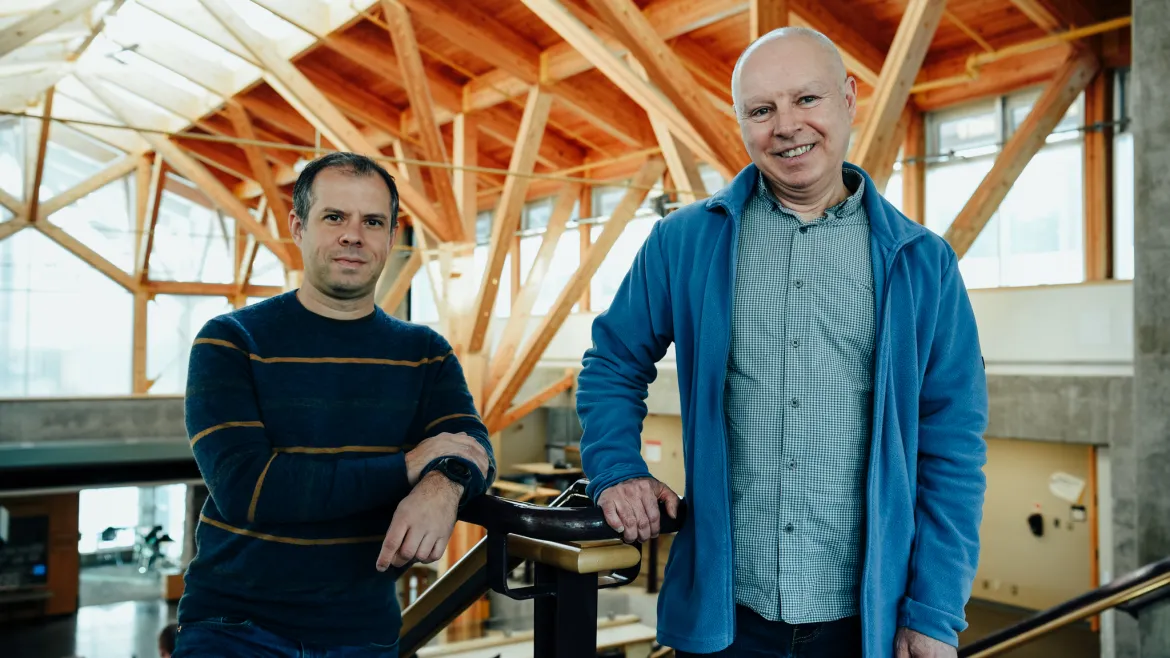
Environmental Science Professor Dr. Stephen Déry is named Rio Tinto Research Chair in Climate Change and Water Security. Ecosystem Science and Management Associate Professor Dr. Eduardo Martins is appointed Rio Tinto Research Chair in Climate Change and Freshwater Fish Ecology.
UNBC researchers get a boost through the Lab to Market grants program, which provides targeted support to move research discoveries toward commercialization. The program empowers faculty to transform laboratory breakthroughs into practical technologies and services that serve industry and community needs. UNBC will lead the North Strategy in collaboration with Lakehead and Yukon Universities to develop commercialization and entrepreneurship training across Canada’s North and engagement with Indigenous communities.
Dr. Anurag Singh, an assistant professor with the UBC Northern Medical Program at the University of Northern British Columbia, is the inaugural director of the Northern Centre for Clinical Research.
February
A community-driven research partnership between Carrier Sekani Family Services and UNBC released a landmark report addressing gender-based violence along the Highway 16 corridor. The study provides actionable recommendations grounded in Indigenous knowledge and lived experience, supporting safer communities for Indigenous women, girls and 2SLGBTQIA+ people.
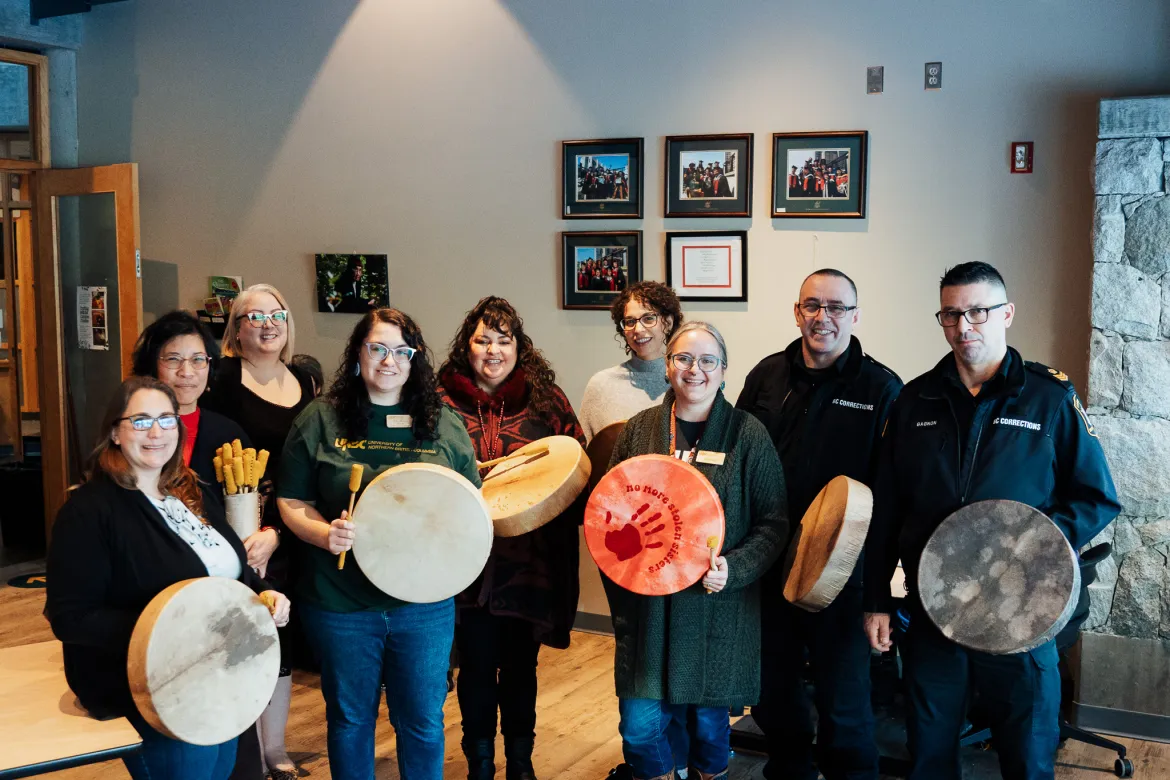
The First Nations Centre received gifted drums from the Prince George Regional Correctional Centre to support ceremony, healing and connection for incarcerated participants, reflecting the University’s commitment to culture-based education and reconciliation in diverse learning settings.
Longtime UNBC faculty members Drs. Ellen Petticrew and Philip Owens were honoured with the Paz Buttedahl Career Achievement Award from the Confederation of University Faculty Associations of British Columbia, recognizing decades of leadership, research excellence and student mentorship that have shaped academic programs and strengthened UNBC’s impact across northern B.C.
March
Professor Heather Smith received the Elias Distinguished Scholar Award for her internationally recognized work in rural health research. Her scholarship continues to influence health policy and practice, highlighting disparities and supporting community-driven healthcare improvements.
The Lheidli T’enneh First Nation (LTFN) and UNBC signed a Memorandum of Understanding to support the educational success of Lheidli students at the University through an initiative involving comprehensive financial assistance and academic support.
The agreement further strengthens a longstanding collaborative relationship between the LTFN and UNBC and is a meaningful response to the University’s commitment to act on Truth and Reconciliation.
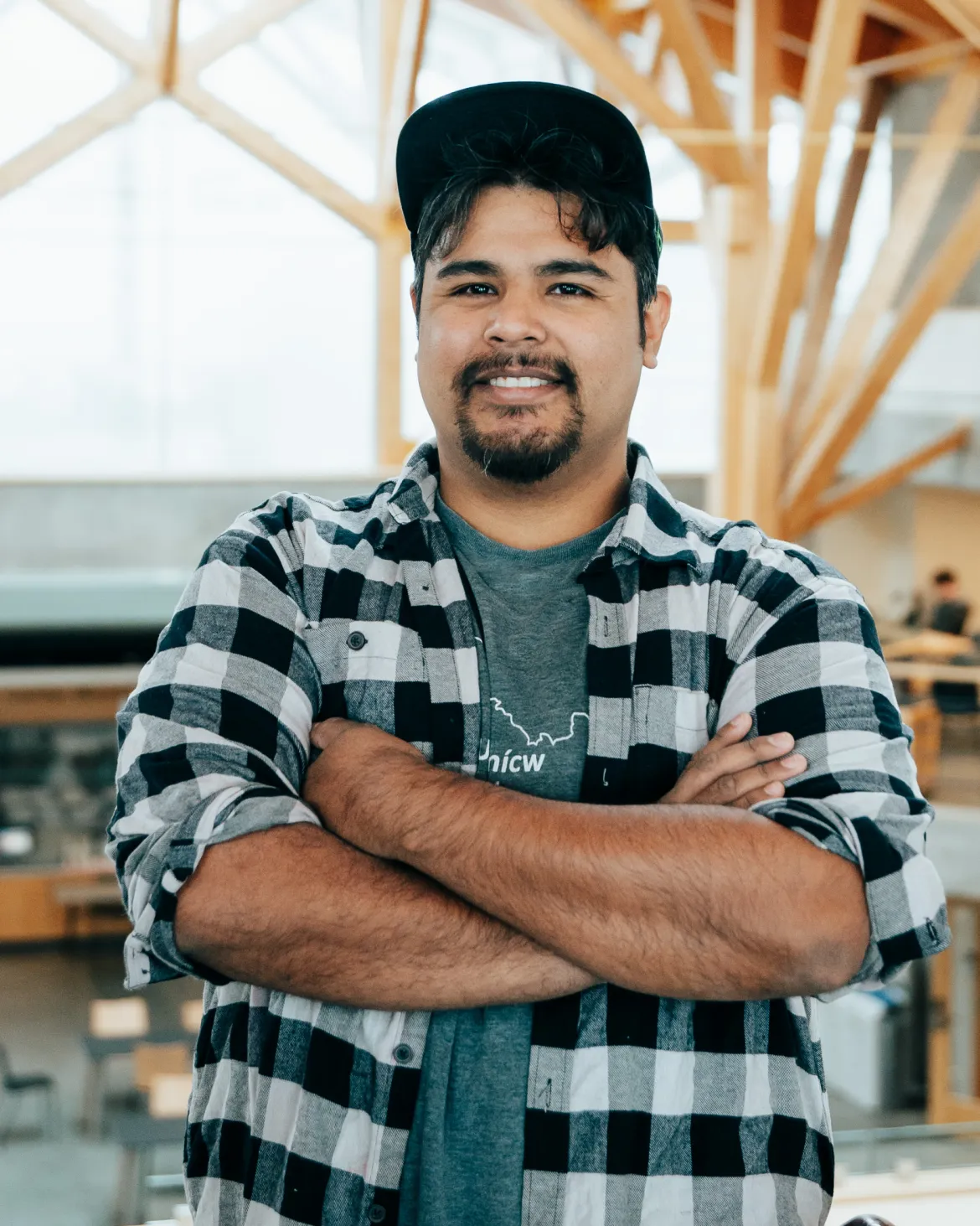
Hayden Leo combines hands-on learning, Indigenous knowledge and sustainability in UNBC’s Forest Ecology and Management Program. As he works toward becoming a Registered Professional Forester, he is applying his education to real-world forestry challenges and shaping a more inclusive industry. Leo's commitment to forestry and sustainability earned him recognition in the Canadian Forest Industries' Wood Business magazine’s 2024 “Top 20 Under 40” issue.
Supported by a national scholarship award, UNBC PhD student Ahmad Jalil is expanding his research into the impacts of black carbon on air quality during an internship at the University of California, Davis and NASA to help advance public health solutions.
April
Research and Indigenous partnership converged through collaboration between Sahtú Dene communities and UNBC, focusing on land stewardship and environmental monitoring guided by traditional knowledge and western science. Master of Arts in Natural Resources and Environmental Studies graduate Annie King is playing a key role in the research through her work in community engagement.
UNBC awards honorary degrees to two remarkable leaders — long-serving northern B.C. community champion Dr. Shirley Bond and a respected Dakelh Elder Dr. Yvonne Pierreroy, who was also a founding contributor to UNBC. Their recognition celebrated legacies of service, cultural leadership and dedication to education that align deeply with UNBC’s mission.
May
The National Collaborating Centre for Indigenous Health marks 20 years at UNBC while welcoming Dr. Terri Aldred as the new Academic Lead.
Guowei Li and Sean Robinson are the Class of 2025 Valedictorians. Guowei, who earned a PhD in Natural Resources and Environmental Studies, is committed to using his knowledge and research to solve real-world challenges. Sean, a Bachelor of Arts in History graduate, is focused intellectual curiosity, leadership and a fierce dedication to inclusion.
UNBC recognizes three distinguished Professors Emeriti, honouring faculty whose careers of teaching, scholarship and mentorship have enhanced the student experience and strengthened academic excellence. Dr. Kerry Reimer, Dr. Elie Korkmaz and Dr. Kathy Lewis were given the honour upon their retirement.
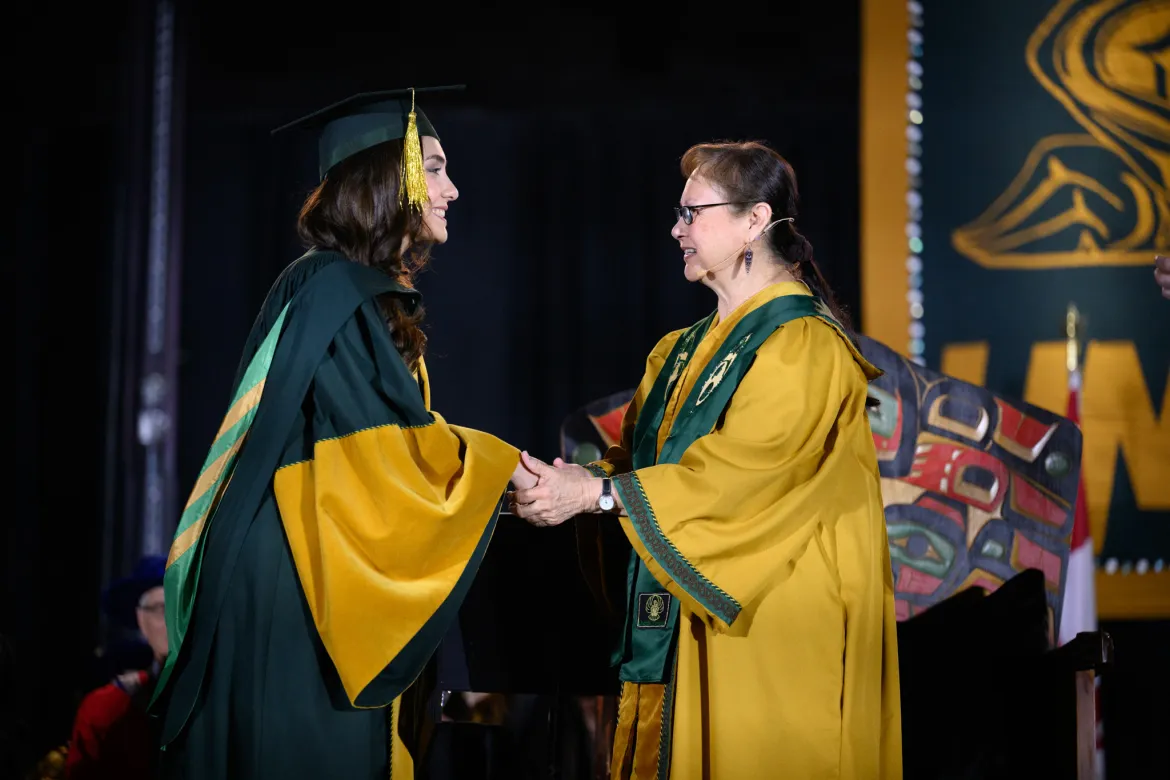
The University community gathers to celebrate UNBC's 32nd Convocation at the Prince George campus, with regional celebrations in Terrace, Gitwinksihlkw, Fort St. John and Quesnel. More than 780 credentials are awarded. Dr. Christine Añonuevo earns the Governor General's Gold Medal after completing her PhD in Health Sciences. Bachelor of Nursing graduate Megan Wilson earned the Governor General's Silver Medal.
Over the last twenty years, starting with matriarch Elaine Hauck, five members of the Hauck family have received degrees through UNBC, all of whom have dedicated their careers to improving the lives of others.
June
UNBC debuts in the Times Higher Education Impact Rankings and becomes a signatory to the UN Sustainable Development Goals Accord, affirming global leadership in sustainability research, community engagement and education for social good.
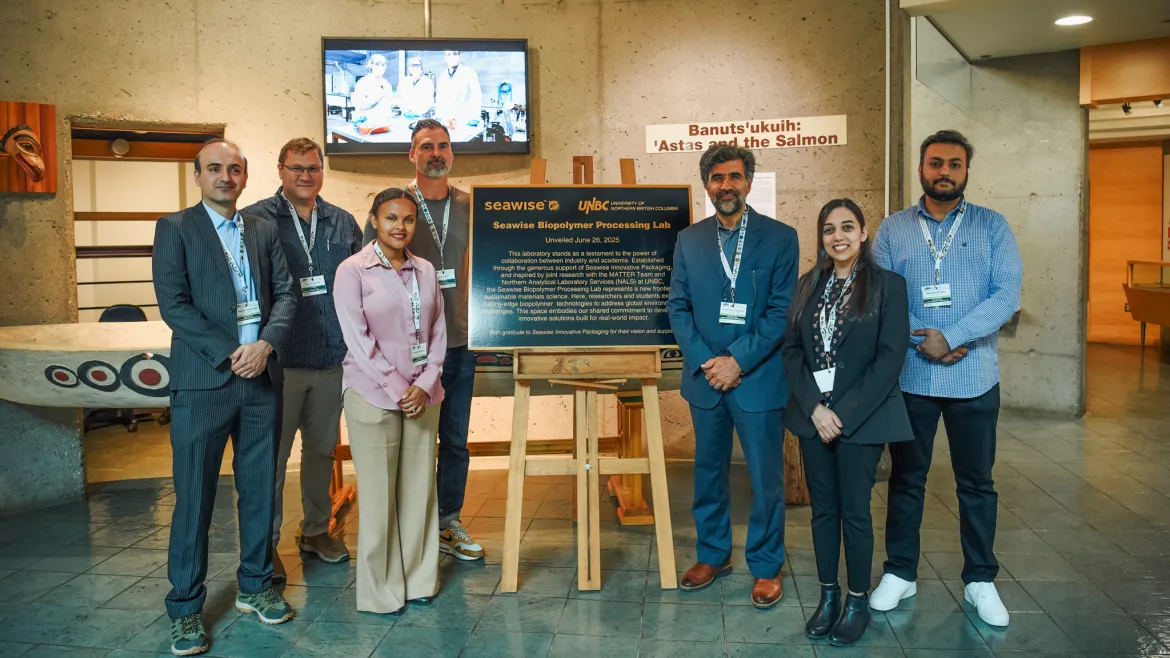
UNBC unveils the new name for the Seawise Biopolymer Processing Lab. It is the first laboratory at UNBC dedicated to producing plant-based biopolymer samples for research purposes. The name recognizes a generous equipment donation from Brown’s Bay Packing Company Ltd. and its subsidiary Seawise Innovating Packaging.
The David Douglas Botanical Garden Society announces the name for its newest garden at the Prince George campus. The Khasdzoon Yusk’ut Botanical Garden celebrates its role as a place of teaching, healing, and connection to the land.
UNBC President Dr. Geoff Payne announces he will be leaving his role to take a new job with Michael Smith Health Research BC. Dr. Payne joined UNBC as a faculty member in 2004 and served as President from 2020-2025.
July
UNBC researchers secure more than $1.5 million in NSERC Discovery Grant funding, supporting projects ranging from climate resilience and cybersecurity to ecosystem health and applied mathematics. Research topics range from wildfire resilience and cybersecurity to freshwater ecosystems and advanced mathematics.
August
UNBC announces the appointment of a new Provost and Vice-President Academic, welcoming Dr. Michel Beaulieu to guide teaching excellence and student success.
September
UNBC launches its new Academic Plan, setting a bold vision for the future focused on student success, Indigenous reconciliation, northern engagement and global impact through research and teaching.
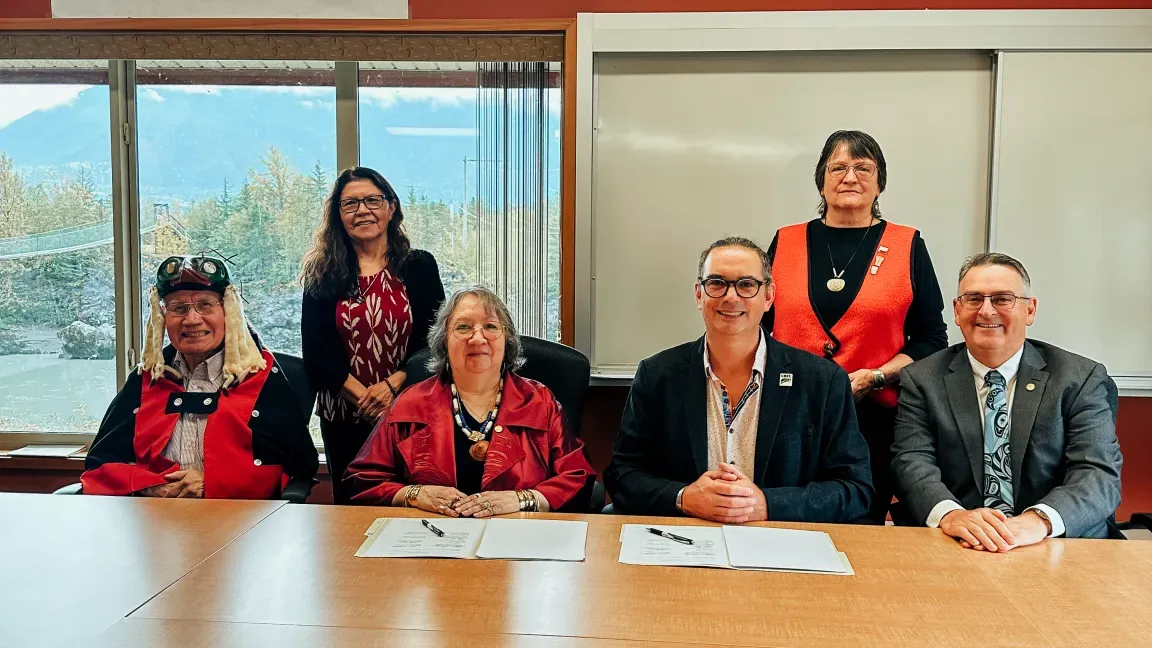
UNBC and Wilp Wilx̱o’oskwhl Nisg̱a’a Institute mark the next chapter in their partnership with a renewed 30-year federated agreement supporting Indigenous education and community collaboration. The agreement also lays out commitments related to advancing the United Nations Declaration on the Rights of Indigenous Peoples, as well as meaningful responses to Truth and Reconciliation and the National Inquiry into Missing and Murdered Indigenous Women and Girls, specifically those calling for changes in education, research, health and well-being, and Indigenous language and culture.
October
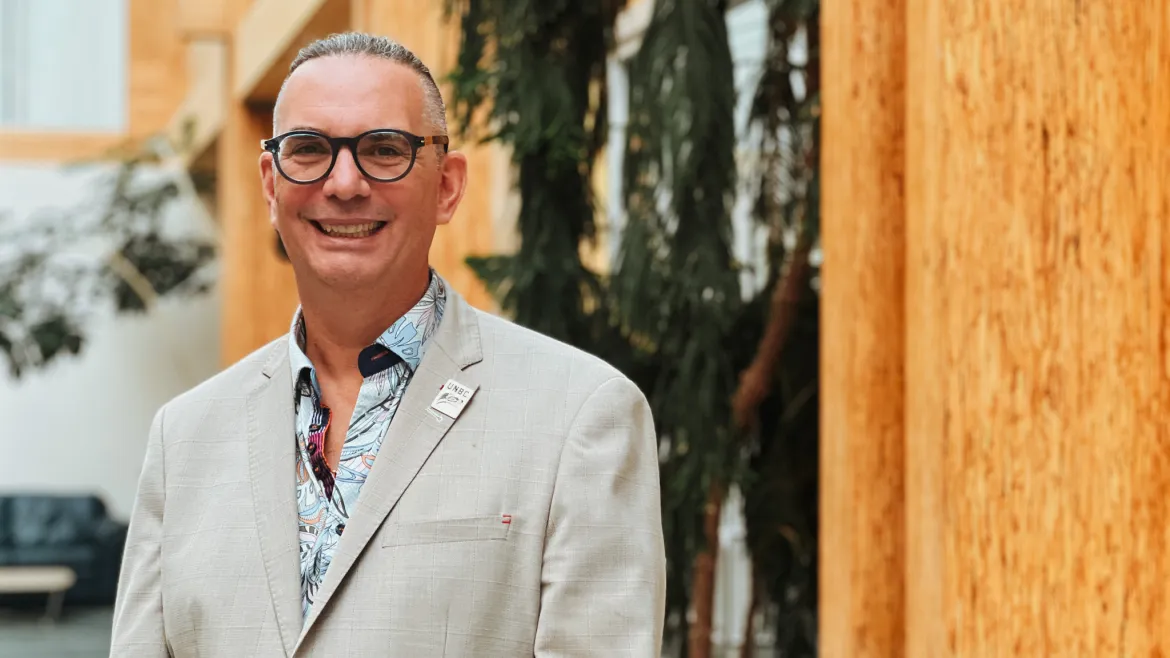
Dr. Bill Owen begins his role as Interim President and Vice-Chancellor. Dr. Owen, a longtime UNBC professor, researcher and administrator is appointed for a term of up to 18 months.
Dr. Shannon Freeman is UNBC’s newest Canada Research Chair. Freeman was appointed a Tier 2 Canada Research Chair, awarded to exceptional emerging researchers, acknowledged by their peers as having the potential to lead their field. As the Canada Research Chair in Technology Adoption for Aging in the North, Freeman will collaborate nationally and internationally to continue her work in finding ways for people to use technology to be able to live independently as they age.
November
UNBC conservation scientist Dr. Oscar Venter is recognized among the world’s most influential researchers, highlighting the global reach of UNBC’s work in biodiversity protection and land-use planning.
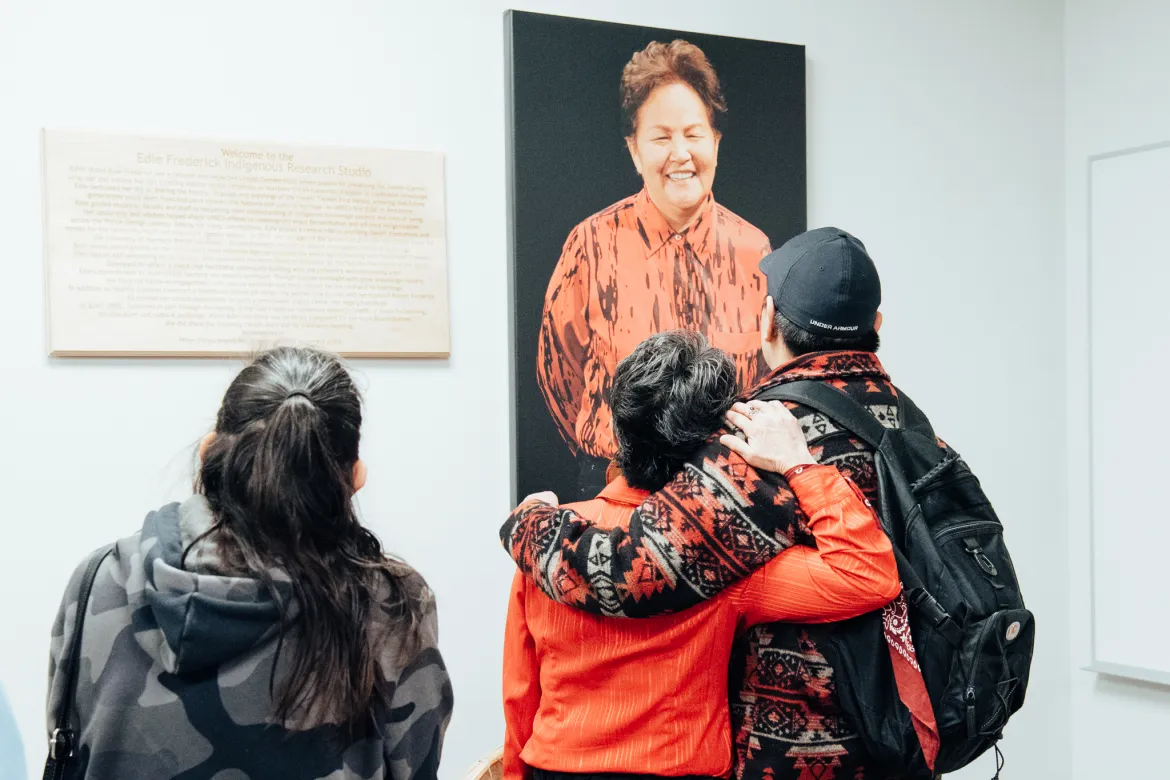
A research studio is renamed in honour of the late Lheidli T’enneh Elder Edith “Edie” Frederick, recognizing her guidance and contributions to community-based research and reconciliation efforts at UNBC. Among her many contributions, Edie was played a central role in providing Dakelh translations and names for the University and important campus spaces. She was part of the group that offered the Dakelh name for the University of Northern British Columbia — Nizdeh Nekeyoh Hohudel’eh Baiyoh (House of Learning) — and she personally chose the name Tseba (by the fire) for The Firepit in the Agora Courtyard.
December
UNBC closes the year by recording its best-ever performance in national research rankings, reflecting sustained growth in research income, output and impact. The achievement underscores the dedication of faculty, students, and staff whose work continues to expand UNBC’s role as a research leader rooted in the North and connected to the world.